
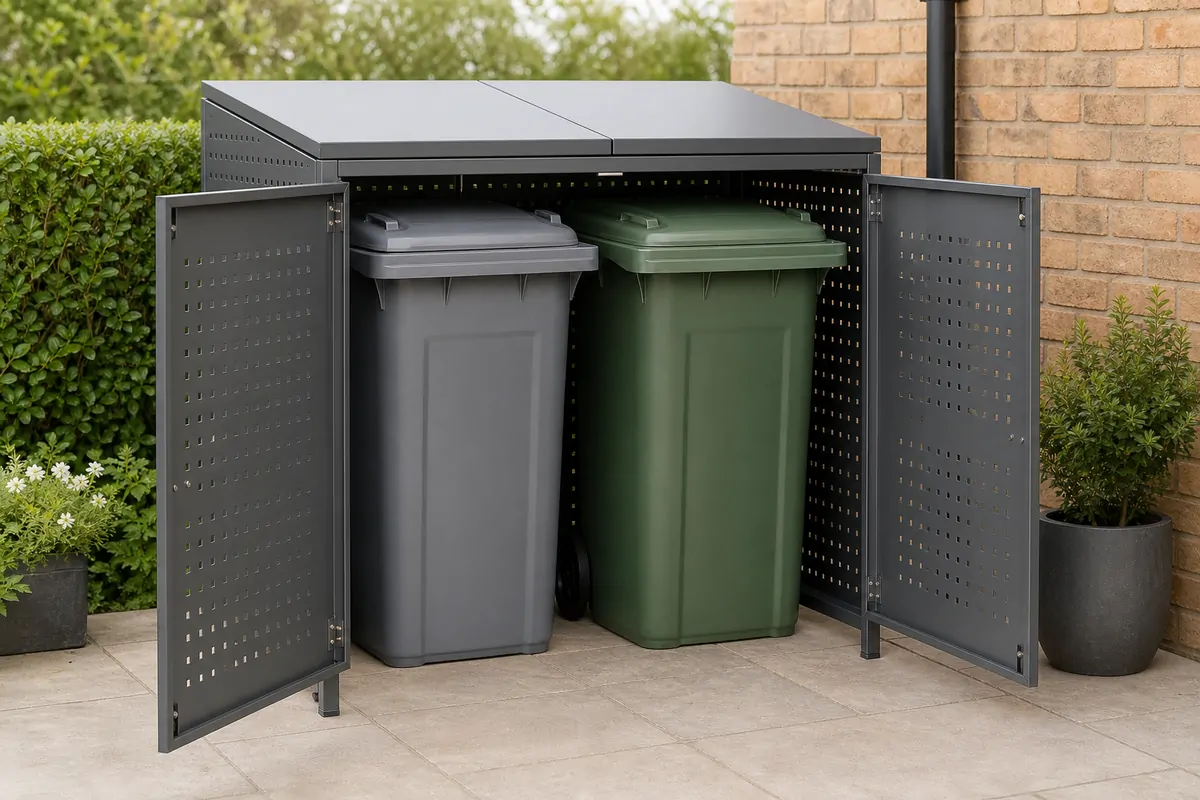
 Original BinFit dimension illustration
UK wheelie bin storage catalogue
Wheelie Bin Storage: Find the Right Bin Store | BinFit
Compare UK wheelie bin stores by size, material and the measurements that matter at home.
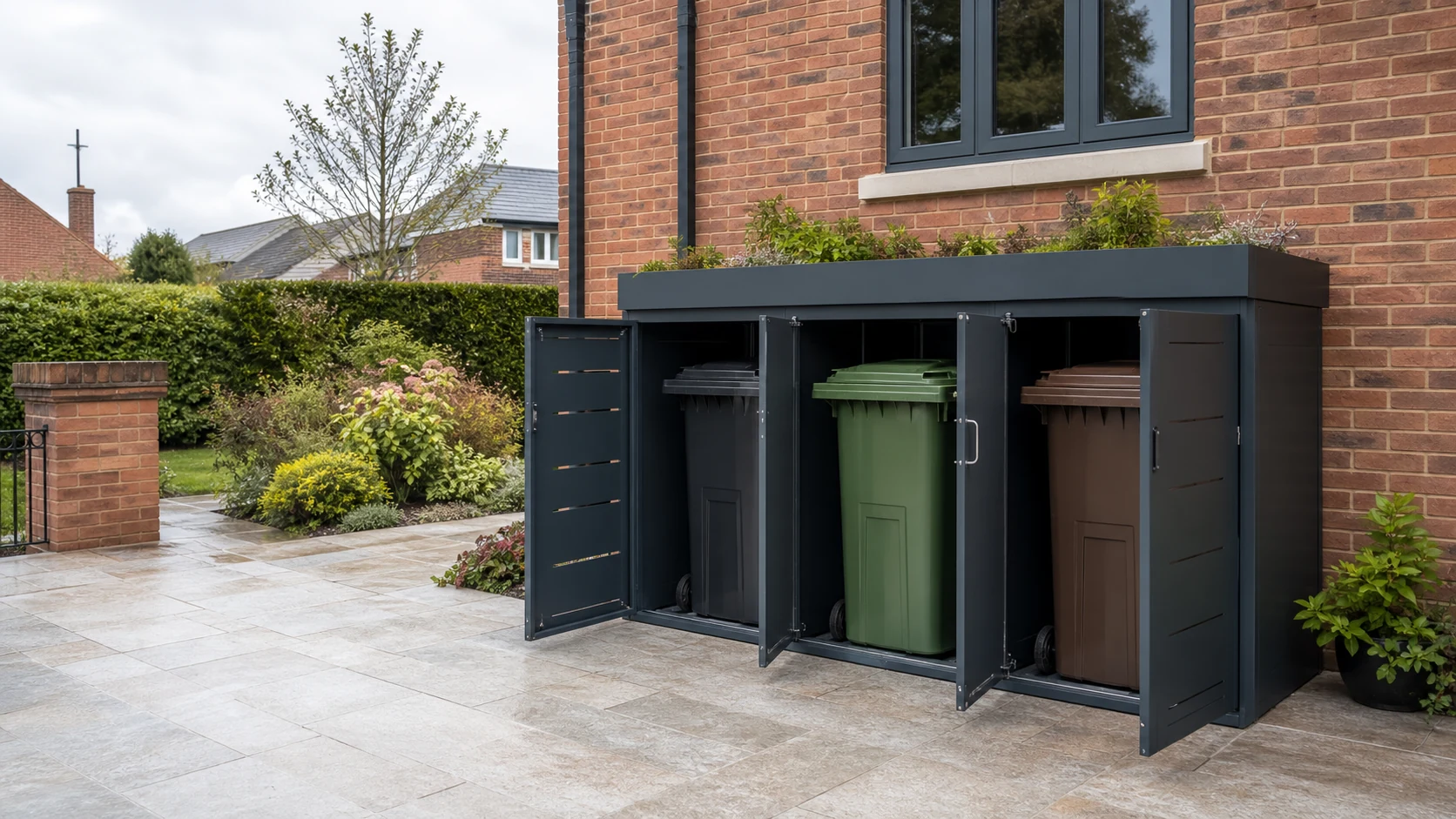
Dimensional comparison, not a fit guarantee
Confirm your exact bins, retailer drawings, opening clearance and installation surface before ordering.
9 products found
Records were checked on 23 July 2026. Missing critical values remain marked for manual confirmation.
Original BinFit dimension illustration
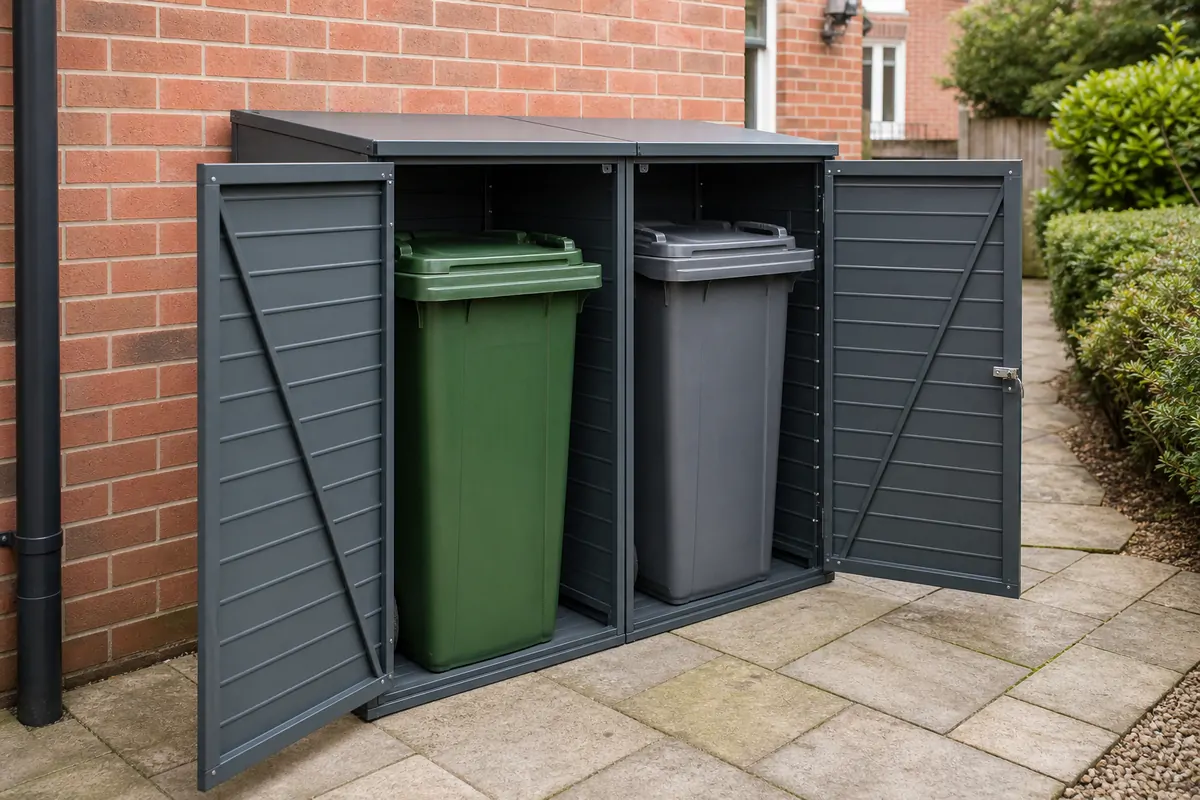 Original BinFit dimension illustration
Original BinFit dimension illustration
Original BinFit dimension illustration
W 138 × D 79 × H 117 cm
Original BinFit dimension illustration
W 144 × D 81 × H 113 cm
Original BinFit dimension illustration
W 144 × D 81 × H 113 cm
Original BinFit dimension illustration
W 140 × D 80 × H 117 cm
Original BinFit dimension illustration
W 132 × D 80 × H 116 cm
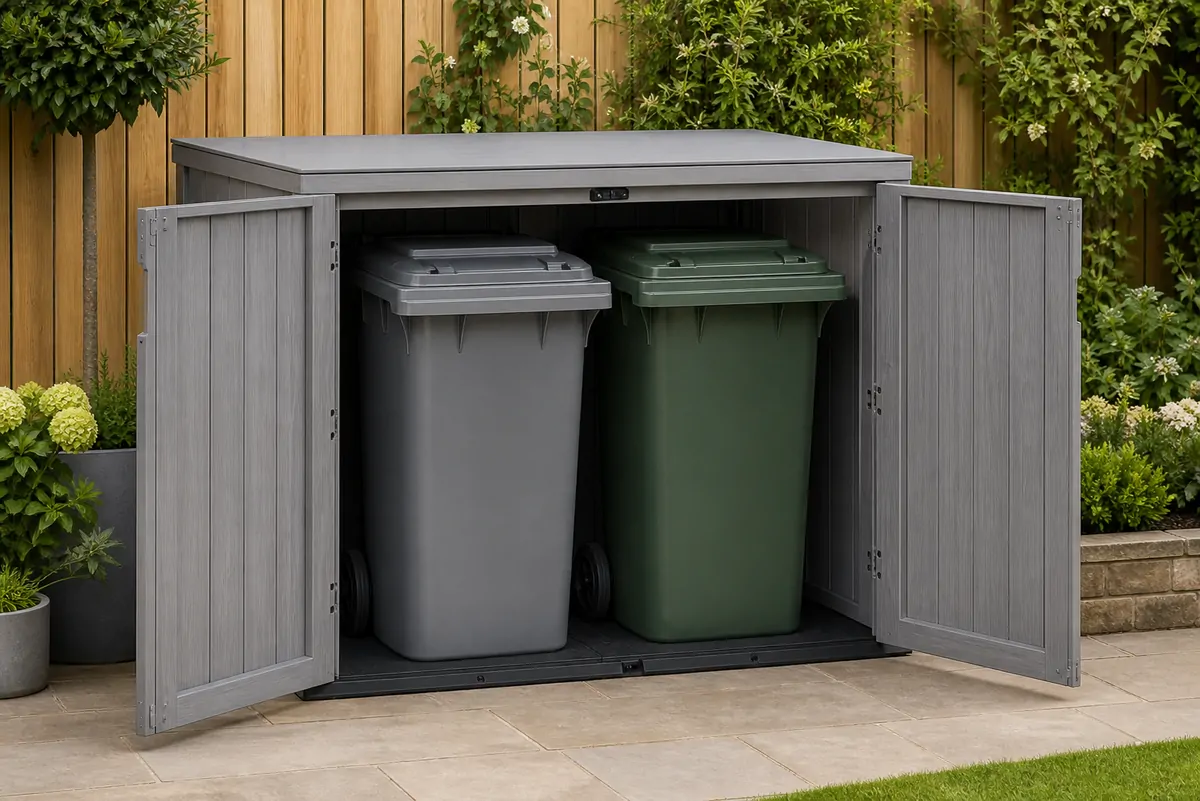 Original BinFit dimension illustration
W 145 × D 82 × H 125 cm
Original BinFit dimension illustration
Keter Hideaway 1200L Bin Store
£199.99W 145.5 × D 82 × H 124.5 cm
Wheelie bin storage: start with the space, not the style
A wheelie bin store can look compact in a product photograph and still be too wide for the gap beside your house. Before comparing finishes, record the usable width, depth and height of the site. Check the narrowest point rather than the easiest point to measure, and leave room for anything that projects into the space, including pipes, window sills and gate posts.
Then measure the bins themselves. The capacity moulded into the body is useful for narrowing the choice, but it does not describe the lid, handles or wheels. If your household has bins from different manufacturers, measure each one and use the largest dimensions when planning wheelie bin storage.
Choose wheelie bin storage by number of bins
Start with the number of bins you need to store, then check the dimensions and opening clearance of each candidate. Our pages for single, double, triple and four-bin storage help remove options that are clearly the wrong size. The Fit Finder can then help you compare available space and opening clearances.
Measure before you buy
- Width: measure the clear space between walls, fences, posts and downpipes. Do not assume a quoted product width includes clearance for fitting or opening doors.
- Depth: allow for the bin body, handles and the space needed to roll a bin forward. A store that fits when closed may still be awkward to use.
- Height: check both the closed height and the room required to lift a lid or roof. Consider nearby windows, eaves and overhanging plants.
- Ground: a flat, stable base helps doors and roofs operate as intended. Check the retailer’s installation and anchoring requirements before ordering.
What to compare after size
- Access: front doors need enough clear space for a full bin to roll out without catching on a wall or gate.
- Roof movement: a lifting roof may need more height than the closed product dimensions suggest.
- Material: timber, metal and plastic have different maintenance, appearance and installation needs. Compare the manufacturer’s care advice rather than relying on a photograph.
- Bin lids and doors: check whether the design lets you open the bins comfortably and whether the doors suit the direction of access in your garden or driveway.
Questions worth checking on a product listing
Before choosing a wheelie bin store, look for external dimensions, internal clearance, the supported number and size of bins, base requirements and whether assembly or anchoring is required. If a critical figure is missing, treat it as a question for the retailer rather than an invitation to guess. A few minutes of measuring can prevent choosing storage that looks right but does not work in everyday use.
Wheelie bin storage buying guide
Choose by bin count, 240-litre clearance and material
Most UK searches begin with capacity — double, triple or four-bin storage — but the final fit depends on real measurements. A nominal two-bin store is not automatically suitable for every pair of 240-litre bins. Compare each compartment opening, internal width, usable depth and roof clearance against your own bins.
Double wheelie bin storage
A two-bin store is the compact starting point for general waste and recycling. Check that both doors can open fully in the available space and that one bin can be removed without moving the other. Continue with the double wheelie bin storage guide.
Triple or 3 wheelie bin storage
Three compartments add significant overall width. Measure walls, gates, drainpipes and uneven ground, then confirm individual lid access. Compare options on the triple wheelie bin storage page.
Four-bin storage
Large stores need careful route and assembly planning. Check the delivered package dimensions, the opening span and whether the base area is level. See four-bin wheelie bin storage.
Wooden, metal or plastic?
- Wood: natural appearance and repairable parts, with ongoing finish and moisture checks.
- Metal: slim panels and strong structure, with coating quality, corrosion protection and anchoring to check.
- Plastic or resin: lower routine maintenance, but panel rigidity, UV exposure and exact internal clearance still matter.
Use published manufacturer dimensions as the starting point, then leave a practical tolerance rather than choosing a store that only fits on paper. For the material decision, read the wooden vs metal bin store guide.